เมื่อพูดถึง “เจ้าหญิง” หลายคนอาจนึกถึงหญิงสาวผิวขาวผ่องดั่งหิมะคือ สโนไวท์ ที่สวยสง่าแม้อยู่ในป่าใหญ่ท่ามกลางสัตว์ป่า แต่หากมองในมุมวิทยาศาสตร์สมัยใหม่ เราอาจตั้งคำถามขึ้นมาใหม่ว่า “ถ้าสโนไวท์กินแอปเปิ้ลแล้วสวย ผิวพรรณเปล่งปลั่ง เธอกินแอปเปิ้ลชนิดใดกันแน่?”
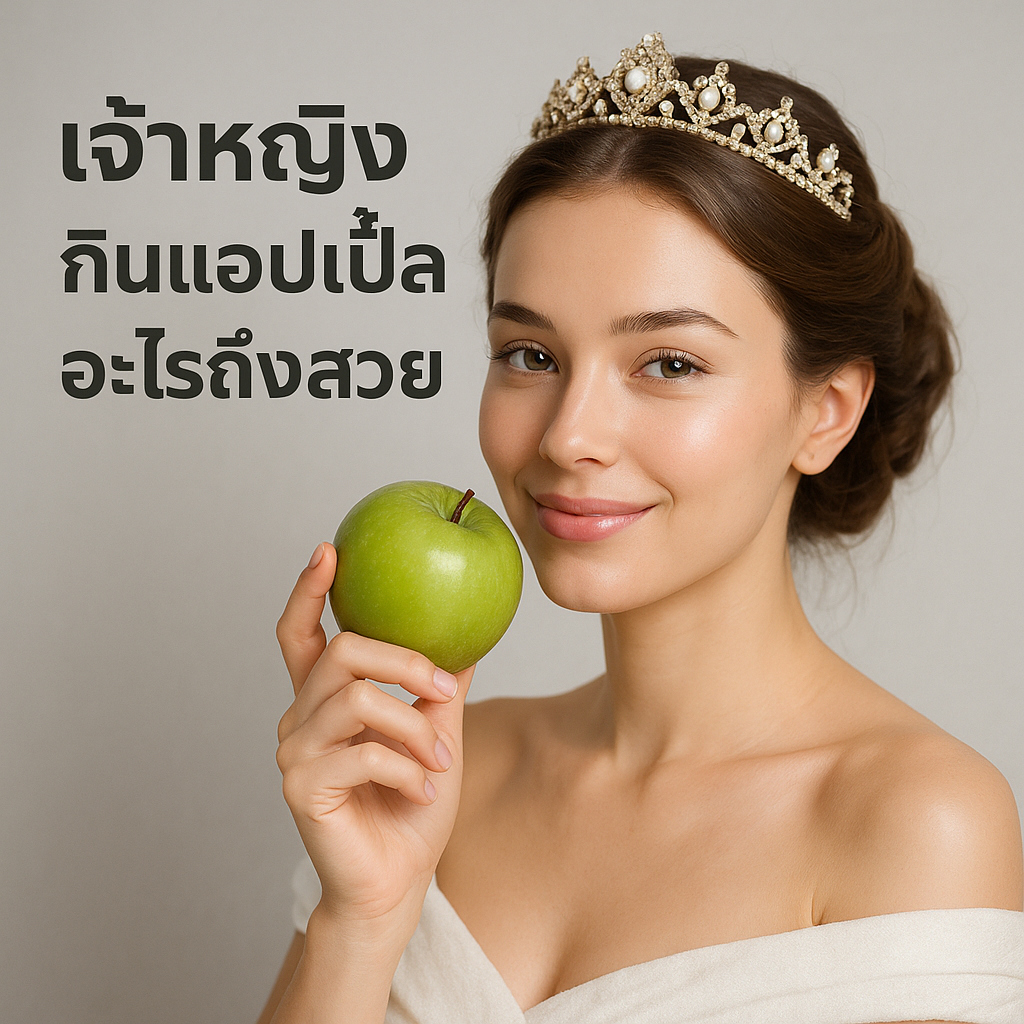
คำตอบนั้นอาจไม่ใช่แอปเปิ้ลธรรมดาที่วางขายในซูเปอร์มาร์เก็ตทั่วไป แต่เป็นแอปเปิ้ลสายพันธุ์หายากจากสวิตเซอร์แลนด์ที่ชื่อว่า Uttwiler Spätlauber ซึ่งเป็นสายพันธุ์ที่มีคุณสมบัติในการเก็บรักษาได้นานโดยไม่เหี่ยวเฉา นักวิทยาศาสตร์ได้นำสเต็มเซลล์จากแอปเปิ้ลสายพันธุ์นี้มาสกัดเป็นสารที่เรียกว่า PhytoCellTec™ Malus Domestica หรือสารสกัดสเต็มเซลล์แอปเปิ้ล ที่มีบทบาทสำคัญในการชะลอความเสื่อมของผิวหนัง
สารสกัดจากแอปเปิ้ลนี้ทำหน้าที่หลักๆ ได้แก่ การปกป้องเซลล์ต้นกำเนิดของผิว (epidermal stem cells) ส่งเสริมการสร้างเซลล์ใหม่ และช่วยชะลอกระบวนการแก่ชราในระดับเซลล์ผิวหนัง โดยช่วยให้ผิวคงความยืดหยุ่น ลดริ้วรอย และมีความกระจ่างใสอย่างยั่งยืน อีกทั้งยังอุดมด้วยสารต้านอนุมูลอิสระที่ช่วยลดความเสียหายจากแสงแดดและมลภาวะได้อย่างมีประสิทธิภาพ
นอกจากแอปเปิ้ลแล้ว ยังมีสารอาหารจากธรรมชาติอีกหลายชนิดที่เป็นกุญแจสำคัญของ “ความงามจากภายใน” ได้แก่:
- สารสกัดจากเมล็ดองุ่น (Grape Seed Extract, GSE): อุดมด้วย OPCs ซึ่งมีฤทธิ์ต้านอนุมูลอิสระสูงกว่าวิตามินซีและอีหลายเท่า ช่วยปกป้องคอลลาเจน ลดริ้วรอย เสริมความแข็งแรงของหลอดเลือดฝอย และต้านการอักเสบ
- สารสกัดจากทับทิม (Pomegranate Extract): มีสารพูนิคาลาจิน และกรดเอลลาจิกที่ช่วยปกป้องผิวจากแสงแดด ลดการอักเสบ กระตุ้นการสร้างคอลลาเจน และช่วยปรับสีผิวให้กระจ่างใส
- สารสกัดจากข้าว (Rice Extract): อุดมด้วยเซราไมด์, แกมมา-ออไรซานอล และกรดไฟติก ซึ่งเสริมเกราะป้องกันผิว เพิ่มความชุ่มชื้น และปกป้องผิวจากอนุมูลอิสระ
- เรสเวอราทรอล (Resveratrol): พบในองุ่นแดงและไวน์แดง มีฤทธิ์กระตุ้นยีนแห่งการชะลอวัย (SIRT1) ต้านการอักเสบ ป้องกันการทำลายของแสงแดด และช่วยให้ผิวคงความอ่อนเยาว์
การศึกษาทางคลินิกมากมายยืนยันว่า สารเหล่านี้เมื่อรับประทานในปริมาณที่เหมาะสม จะช่วยเสริมสร้างความแข็งแรงให้กับเซลล์ผิว เพิ่มความชุ่มชื้น ลดการอักเสบ และชะลอริ้วรอยได้อย่างปลอดภัย แต่ผู้ที่มีโรคประจำตัวหรือใช้ยาบางประเภทควรปรึกษาแพทย์ก่อนใช้ เนื่องจากสารสกัดบางชนิดอาจมีปฏิกิริยากับยาได้
ดังนั้น ในปัจจุบันหากจะตอบคำถามว่า “สโนไวท์กินแอปเปิ้ลอะไรถึงสวย” คำตอบอาจจะเป็น แอปเปิ้ลพันธุ์พิเศษที่ ไม่ใช่เพียงแค่ผลไม้ธรรมดา แต่คือแหล่งสารอาหารที่ปลุกความงามให้ตื่นขึ้นจากภายใน และเมื่อผสานเข้ากับสารอาหารจากธรรมชาติอื่นๆ ก็ยิ่งเสริมพลังความงามให้ครบเครื่อง เหมือนเจ้าหญิงผู้หลับใหลในป่ากลับตื่นมาพร้อมผิวที่สดใส เปล่งประกาย
และคุณ…ก็สามารถเป็น ‘สโนไวท์’ ได้ในแบบของคุณเอง เพียงเริ่มต้นจากการเลือกสารอาหารให้ถูกต้องและปลอดภัย
เอกสารอ้างอิง
- Schmid, D., Schürch, C., Blum, P., Belser, E., & Zülli, F. (2008a). Plant Stem Cell Extract for Longevity of Skin and Hair. SOFW Journal, 134(5), 30-35.
- Gardiki, Vassiliki, et al. “Plant Stem Cells in Cosmetic Industry.” Plants 14.3 (2025): 433.
- Shi, J., Yu, J., Pohorly, J. E., & Kakuda, Y. (2003). Polyphenolics in grape seeds—biochemistry and functionality. Journal of Medicinal Food, 6(4), 291-299.
- Yamakoshi, J., Sano, A., Tokutake, S., Saito, M., Kikuchi, M., Kubota, Y., … & Otsuka, T. (2004). Oral intake of proanthocyanidin B1-rich grape seed extract improves the clinical condition of female patients with chloasma. Phytotherapy Research, 18(11), 895-899.
- Berry et al., 2016; Garavaglia et al., 2016; NCCIH, 2020; Unusan, 2020; National Library of Medicine, 2022; MSKCC: Grape Seed Extract, 2022
- Afaq, F., Saleem, M., Krueger, C. G., Reed, J. D., & Mukhtar, H. (2005). Anthocyanin- and hydrolyzable tannin-rich pomegranate fruit extract modulates MAPK and NF-κB pathways and inhibits skin tumorigenesis in CD-1 mice. International Journal of Cancer, 113(3), 423-433.
- Afaq, F., Zaid, M. A., Khan, N., Dreher, M., & Mukhtar, H. (2009). Protective effect of pomegranate-derived products on UVB-mediated damage in human reconstituted skin. Experimental Dermatology, 18(6), 553-561.
- Aslam, M. N., Lansky, E. P., & Varani, J. (2006). Pomegranate as a cosmeceutical source: pomegranate fractions promote proliferation and procollagen synthesis and inhibit matrix metalloproteinase-1 production in human skin cells. Journal of Ethnopharmacology, 103(3), 311-318.
- Yoshimura, M., Watanabe, Y., Kasai, K., Yamakoshi, J., & Koga, T. (2005). Inhibitory effect of an ellagic acid-rich pomegranate extract on tyrosinase activity and ultraviolet-induced pigmentation. Bioscience, Biotechnology, and Biochemistry, 69(12), 2368-2373.
- Kasai, K., Yoshimura, M., Koga, T., Arii, M., & Yamakoshi, J. (2006). Effects of oral administration of ellagic acid-rich pomegranate extract on ultraviolet-induced pigmentation in the human skin. Journal of Nutritional Science and Vitaminology, 52(5), 383-388.
- Farkas, D., Oleson, L. E., Zhao, Y., Harmatz, J. S., Zinny, M. A., Court, M. H., & Greenblatt, D. J. (2005). Pomegranate juice does not impair clearance of oral or intravenous midazolam, a probe for cytochrome P450-3A activity: comparison with grapefruit juice. Journal of Clinical Pharmacology, 45(8), 901-911.
- Ideta, Ritsuro, et al. “Orally administered glucosylceramide improves the skin barrier function by upregulating genes associated with the tight junction and cornified envelope formation.” Bioscience, biotechnology, and biochemistry 75.8 (2011): 1516-1523.
- Juliano, Claudia, et al. “Antioxidant activity of gamma-oryzanol: mechanism of action and its effect on oxidative stability of pharmaceutical oils.” International journal of pharmaceutics 299.1-2 (2005): 146-154.
- Bizot, Valérie, et al. “Improving skin hydration and age-related symptoms by oral administration of wheat glucosylceramides and digalactosyl diglycerides: a human clinical study.” Cosmetics 4.4 (2017): 37.
- Takara, Tsuyoshi, et al. “Oryza Ceramide®, a rice-derived extract consisting of glucosylceramides and β-sitosterol glucoside, improves facial skin dehydration in Japanese subjects.” Functional Foods in Health and Disease 11.8 (2021): 385-407.
- Baxter, R. A. (2008). Anti-aging properties of resveratrol: review and report of a potent new antioxidant skin care formulation. Journal of Cosmetic Dermatology, 7(1), 2-7.
- Borra, M. T., Smith, B. C., & Denu, J. M. (2005). Mechanism of human SIRT1 activation by resveratrol. Journal of Biological Chemistry, 280(17), 17187-17195.
- Afaq, F., Adhami, V. M., Ahmad, N., & Mukhtar, H. (2003). Prevention of short-term ultraviolet B radiation-mediated damages by resveratrol in SKH-1 hairless mice. Toxicology and Applied Pharmacology, 186(1), 28-37.
- Park, J., & Boo, Y. C. (2013). Isolation of resveratrol from Vitis viniferae caulis and its potent inhibition of human tyrosinase. Evidence-Based Complementary and Alternative Medicine, 2013, 645257.
- Buonocore, D., Lazzeretti, A., Tocabens, P., Nobile, V., Cestone, E., & Marzatico, F. (2012). Resveratrol-procyanidin blend: nutraceutical and antiaging efficacy evaluated in a placebocontrolled, double-blind study. Clinical, Cosmetic and Investigational Dermatology, 5, 159-165.
- Pace-Asciak, Cecil R., et al. “The red wine phenolics trans-resveratrol and quercetin block human platelet aggregation and eicosanoid synthesis: implications for protection against coronary heart disease.” Clinica chimica acta 235.2 (1995): 207-219.
- Detampel, Pascal, et al. “Drug interaction potential of resveratrol.” Drug metabolism reviews 44.3 (2012): 253-265.
- Bowers, Jennifer L., et al. “Resveratrol acts as a mixed agonist/antagonist for estrogen receptors α and β.” Endocrinology 141.10 (2000): 3657-3667.